In the highly competitive world of real estate development, one of the greatest challenges is selling a product that does not yet exist. “Off-plan” or pre-construction sales are the lifeblood of real estate financing. Developers need investors and homebuyers to commit millions of dollars based on a promise.
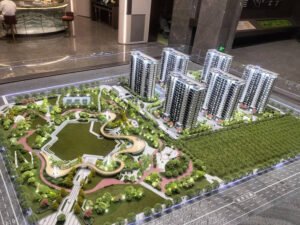
While glossy brochures, virtual reality (VR) tours, and 4K photorealistic renders are standard in today’s marketing arsenals, there is one traditional tool that consistently outperforms them in closing deals: the physical architectural model.
In this article, we will delve into the psychological and practical reasons why every ambitious real estate developer must invest in a high-quality scale model for their sales suite.
The Psychological Power of Tangibility
Human beings are tactile creatures. We process information differently when it occupies physical space.
1. Instant Spatial Comprehension
When a prospective buyer wears a VR headset or looks at a screen, they are viewing a 2D projection of a 3D space. It can be disorienting. A physical architectural model, however, allows a group of people to gather around, point at specific areas, and instantly understand the scale and orientation of the building. They can see where the sun will hit the pool area at noon and exactly how close their balcony is to the neighboring park.
2. Emotional Connection and Ownership
There is a profound psychological effect when a buyer can physically point to a tiny balcony on a model and say, “That is my future home.” The architectural model turns an abstract concept into a tangible reality. It creates a sense of ownership and emotional attachment that flat images simply cannot replicate.
Boosting Pre-Sales and ROI
Investing in a premium architectural model might seem like a significant upfront cost, but the Return on Investment (ROI) is unparalleled.
Accelerating Decision Making
In real estate, time is money. An architectural model answers dozens of client questions instantly. Where is the parking entrance? How big is the lobby? What does the roof terrace look like? By providing instant, intuitive answers, models reduce hesitation and accelerate the buyer’s decision-making process.
Justifying Premium Pricing
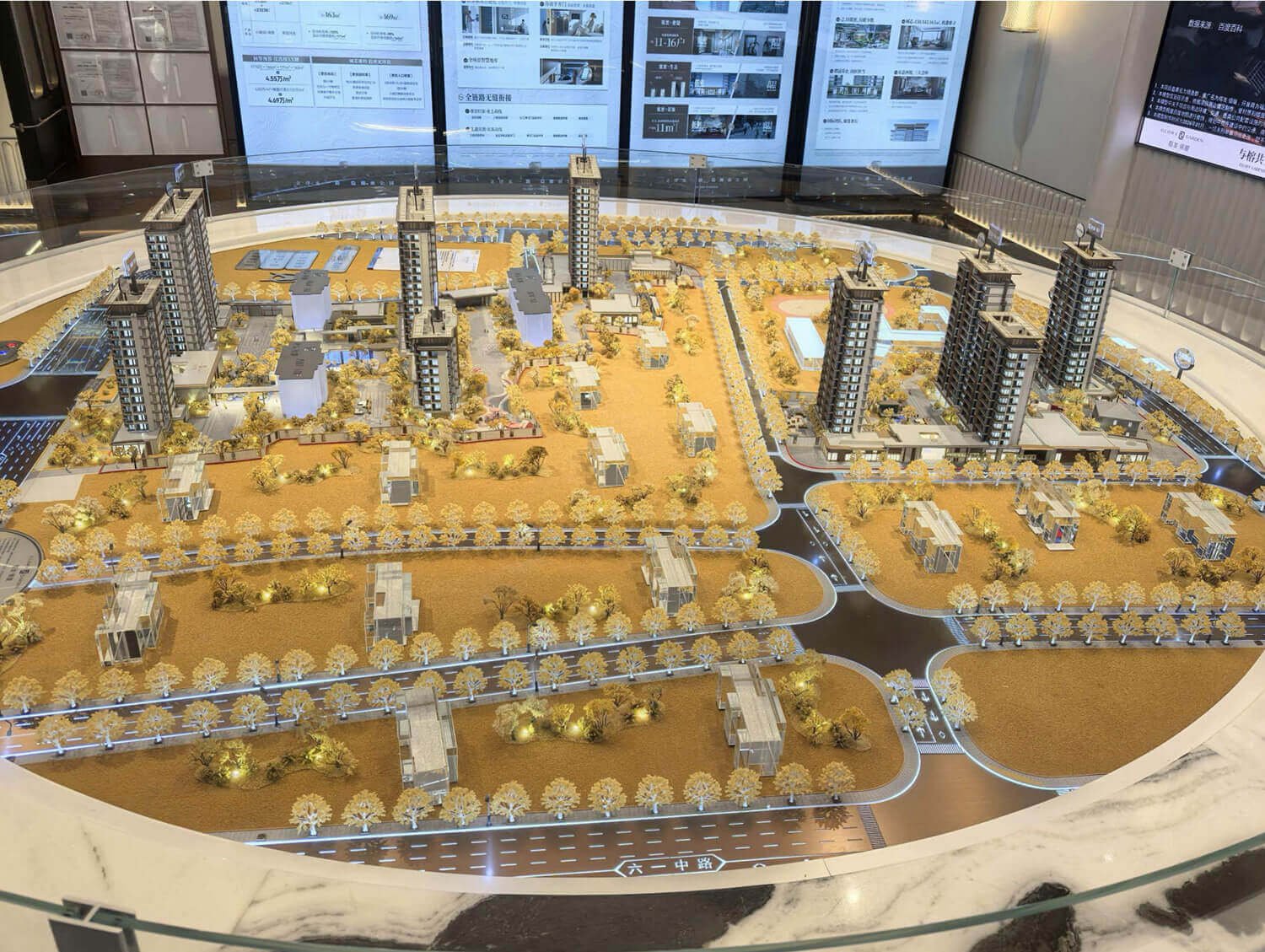
High-quality models exude luxury. When a developer invests in an intricate, beautifully lit model featuring detailed landscaping, high-end materials, and interactive lighting systems controlled via an iPad, it sends a subconscious message to the buyer: This project is of the highest quality. It helps justify premium price tags for luxury apartments and commercial spaces.
Enhancing Investor Pitching
Homebuyers aren’t the only ones who benefit from an architectural model. When developers pitch massive projects to banks, private equity firms, or municipal zoning boards, a physical model is an invaluable asset.
- For Investors: It proves that the project has moved past the “napkin sketch” phase and is a serious, fully fleshed-out endeavor.
- For City Councils: Urban planning models help developers demonstrate how their building will integrate seamlessly with the existing neighborhood, easing concerns about shadowing, traffic flow, and aesthetic clashes.
The Integration of Smart Technology
Today’s architectural models are not static blocks of wood and plastic. Modern model makers integrate cutting-edge technology to make these models interactive centerpieces of the sales suite.
- Interactive Lighting: Sales agents can use a tablet to light up specific apartments that match a buyer’s criteria (e.g., “Show me all available 3-bedroom units on the top 5 floors”).
- Mechanical Movement: High-end models can feature moving parts, such as rotating car park platforms or retractable stadium roofs.
- Augmented Reality (AR) Overlays: Viewers can look at the physical model through a tablet screen to see digital data—like wind flow, structural materials, or interior layouts—superimposed onto the physical structure.
Conclusion: A Centerpiece for Success
In an age dominated by digital media, the physical architectural model stands out. It acts as the anchor of any real estate sales center, drawing people in, answering their questions, and capturing their imagination. It is not an expense; it is a critical marketing asset that pays for itself by driving faster, higher-value sales.